

Pearls Blog
Integration Between Planning and BIM in Engineering Projects
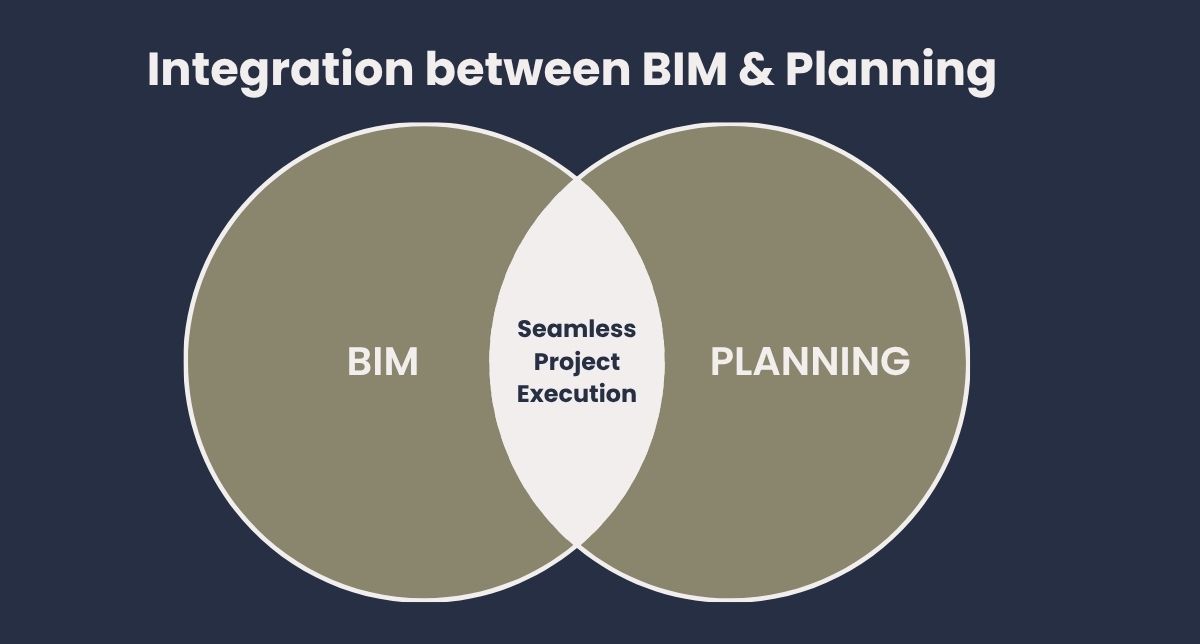
Integration between planning & bim
introduction
The construction and engineering industry is undergoing digital transformation, with Building Information Modeling (BIM) emerging as one of the most impactful tools. BIM enables the creation of detailed digital models of a facility, capturing not only geometry but also functional and construction related information.
When integrated with project planning, BIM transforms traditional scheduling into a dynamic, visual, and collaborative process, significantly enhancing efficiency, accuracy, and decision making.
The Role of BIM in Project Management
BIM is more than a 3D design tool. It includes detailed information about:
– Materials and quantities
– Construction sequences
– Maintenance requirements.
In project management, linking BIM with planning tools such as Primavera P6, Microsoft Project, or Synchro creates a 4D simulation (3D + time), where each construction activity is visually represented in the model according to its scheduled timing. This integration allows stakeholders to identify potential problems, optimize sequences, and communicate progress more effectively.
Benefits of Integrating Planning and BIM
1. Enhanced Visualization: By linking schedules to 3D models, engineers and planners can visually track project progress and understand complex construction sequences. This helps identify bottlenecks before they occur.
2. Clash Detection and Risk Reduction: Scheduling in isolation may miss conflicts between different disciplines. Integrated BIM allows planners to detect clashes between structural, mechanical, and electrical works early, reducing rework and delays.
3. Improved Collaboration: A shared BIM environment ensures that architects, engineers, planners, and contractors work with consistent and updated information, fostering real time collaboration and decision making.
4. Accurate Resource Management: Linking BIM with planning provides precise estimates for labor, equipment, and material needs, reducing wastage and cost overruns.
5. Predictive Planning: Planners can simulate multiple scenarios to forecast the impact of design changes, weather delays, or resource limitations, enabling proactive adjustments.
Practical Steps for Implementing BIM Integrated Planning
1. Define Scope of Integration: Identify which parts of the project will be linked to BIM. Focus on high risk or complex areas first, such as structural frameworks, MEP systems, or facade installations.
2. Choose Compatible Software: Select planning tools that can directly integrate with BIM platforms. Examples include Primavera P6 or Microsoft Project linked with Autodesk Navisworks, Synchro, or Revit.
3. Set Standards: Establish naming conventions, work breakdown structures, and Levels of Detail for the BIM model to ensure consistent data across planning and modeling teams.
4. Develop a Collaborative Workflow: Implement a process where updates in the BIM model reflect automatically in the schedule, and schedule adjustments update the model. This ensures synchronization and minimizes errors.
5. Conduct 4D Simulations: Use the integrated model to simulate construction sequences, identify clashes, and optimize schedules before field execution. Visual simulations help all stakeholders understand project flow.
6. Train Teams: Provide training for planners, engineers, and site supervisors on using BIM tools effectively. Encourage collaboration between technical and planning teams to maximize benefits
Challenges and Considerations
Despite its benefits, integrating BIM with planning comes with challenges:
1. Data Management: Large BIM models contain extensive data that must be carefully managed and updated to ensure schedule accuracy.
2. Expertise Required: Both planning and technical teams must understand BIM principles and software functionalities, which may require training and organizational adaptation.
3. Software Compatibility: Not all planning and BIM tools integrate seamlessly; sometimes middleware or custom solutions are needed.
4. Initial Time Investment: Setting up an integrated system requires time and resources upfront, although long-term gains in efficiency and risk reduction typically outweigh these costs.
Real World Applications
Pearls integrates BIM and planning to drive efficiency across complex engineering projects. In the Administrative University upgrade project, our team delivered 4D BIM by linking the project schedule with the 3D model—enabling precise progress tracking and smoother project delivery.
Discover how Pearls provided and integrated a detailed 3D modeling, coordination drawings, and advanced 4D BIM solutions with project controls services in the projects
Conclusion
Integrating planning with BIM is rapidly becoming standard practice in engineering project management. By linking schedules to rich 3D models, project managers gain a dynamic, visual tool that enhances collaboration, predicts risks, and optimizes resources.
For engineers, planners, and contractors, mastering BIM integrated planning is no longer optional it is essential for delivering projects on time, within budget, and to the highest quality standards. As the industry continues to embrace digital solutions, this integration represents a key competitive advantage for any engineering organization.