

Pearls Blog
Root Causes of Construction Project Delays: Comprehensive Planning and Scheduling Guide
Root Causes of Construction Project Delays
introduction
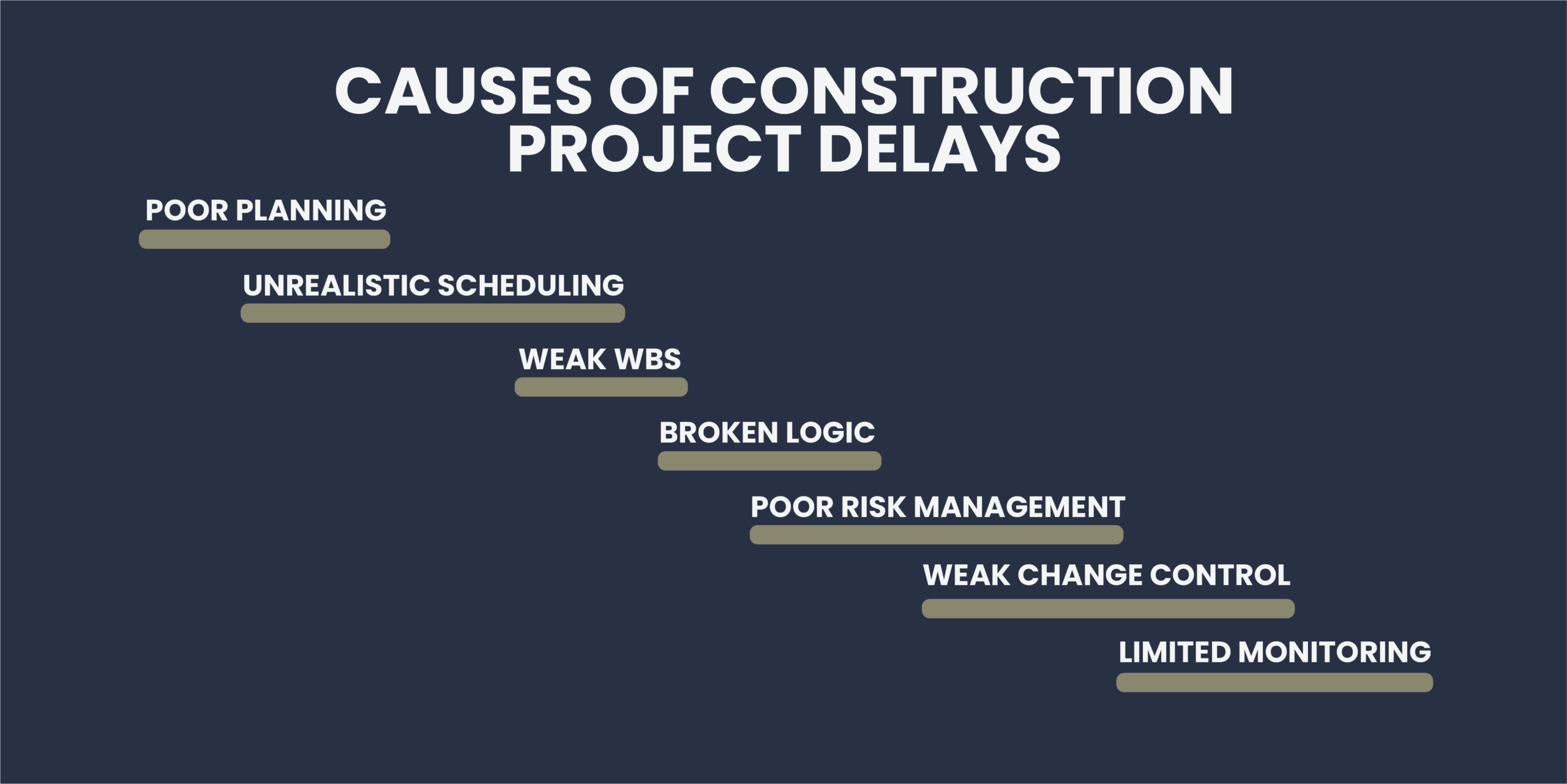
Construction project delays and cost overruns are a major problem in U.S. commercial building and infrastructure projects. While people often blame site conditions or labor shortages, many delays actually start with poor planning and scheduling.
1. Starting Construction Without Complete Planning
One of the biggest causes of delay is starting field work before the design is fully complete. In fast-track projects, this can create scope creep, rework, and schedule problems if coordination is weak.
Incomplete designs often lead to more RFIs, more submittals, and more changes in the field. Without a stable plan, it becomes difficult to build a reliable schedule baseline or perform accurate delay analysis later.
2. Unrealistic Project Schedules and Durations
Another common issue is the use of overly optimistic schedules that fail to reflect the project’s true complexity. When durations are based on weak assumptions, and the scheduler or planner lacks sufficient experience or fails to use historical data and contractor input, delays can emerge quickly once work begins.
In Primavera P6, a schedule should include realistic float and contingency so the project can absorb normal disruptions. Without that, even small issues can affect the critical path and lead to cost and time overruns.
Know how a Planner’s or Scheduler’s Experience Can Cause Project Delays
3. Poor Work Breakdown Structure (WBS)
A poorly structured Work Breakdown Structure makes progress harder to track. When activities are too broad, the team cannot easily see which part of the project is slipping.
A weak WBS also hurts accountability and makes earned value reporting less reliable. It becomes harder to connect scope, cost, and schedule in a way that supports strong project controls.
4. Lack of Proper Schedule Logic and Integration
Construction schedules must connect civil, structural, MEP, and architectural work in the right order. If the logic is missing or incorrect, the critical path becomes unreliable and coordination problems increase.
This also creates delays in submittals, RFIs, and material approvals because one discipline may be waiting on another. A well-built CPM schedule helps the team see dependencies clearly and plan work in the correct sequence.
5. Inadequate Risk Planning
Every project faces risk, but many schedules do not account for it properly. Weather, permits, site conditions, and procurement delays can all disrupt progress if they are not planned for early.
Good risk planning gives the team time to react before delays become serious. It also supports better earned value tracking and makes baseline revisions more meaningful when conditions change.
6. Weak Change and Baseline Management
Change is normal in construction, but poor change control can turn small adjustments into major delays. If change orders are approved without time impact review, the schedule baseline quickly becomes outdated.
Baseline revisions should be managed carefully so the project team can still measure performance correctly. Without that control, delay analysis becomes harder and the real impact of RFIs, submittals, and scope changes can be missed.
7. Infrequent Schedule Updates and Monitoring
A schedule must be updated regularly to stay useful. If project teams do not update Primavera P6 or other scheduling tools often enough, they lose visibility into emerging delays.
Weekly or bi-weekly updates help managers compare actual progress to the baseline and react early. This keeps the schedule active as a control tool instead of just a record of past work.
frequently asked questions
The main causes are poor planning, unrealistic schedules, weak WBS structure, bad schedule logic, weak risk planning, and poor change management. RFIs, submittals, and slow baseline revisions can also add to the delay.
A schedule baseline gives the team a fixed point to measure progress against. Without it, delay analysis and earned value reporting become much less accurate.
Primavera P6 helps planners build logic-based schedules and monitor the critical path. It also supports baseline revisions, progress updates, and better visibility into delays.